
• Letter to Dave Sim – March 13, 2007 – On Crossing a Self-publishing Milestone

      0 comments

    March 13, 2007

    Dear Dave:

    How have you been? The last I wrote you was July, 2006, so quite sometime ago. Man, has it been that long? Guess so.

    Anyway…

    I’m about 30 pages away from completing Collected Letters 2004. I would have been done much sooner but had misplaced the book for several months and finally recovered it about a week ago. Very intriguing material all around. One thing that kept popping up in your letters was the question of when/if the mail would taper off and you’d finally have some actual retirement time. Aside from this letter taking up space in your mailbox, has your letter-answering load lightened since, say, May of 2004? I know it hasn’t dropped off altogether since you now post at Dave Sim’s Blogandmail (speaking of which, is that where I should find a reply to this letter, if you do reply? I must admit, I don’t check the blog all that often, namely due to there not being enough hours in the day to read through everything).

    Things have been going well over on my end. Just the other week my wife and I found out we’re pregnant with our second child. We’ll find out within the next couple of weeks the actual due date but we’re estimating it to be somewhere between late October to early November. This also means that we’ll begin house hunting sometime in May to allow room for the newest addition to the family.

    On the self-publishing front, I crossed a milestone in my career on September 29, 2006, when I released my independent superhero novel entitled, Axiom-man, who was a character I created back in my high school drawing days and finally, after all these years, decided to actually do something with him other than fantasize heroic tales about him in my head. The reason the release was a milestone was because of the wonderful media attention—not to mention sales—that resulted due to the character being Winnipeg’s own superhero. TV, Radio, Newspaper—very exciting as most self-published authors are usually swept under the rug because they’re not “real” publishers. What I always found interesting about that argument was that, in the end, the reader doesn’t care if you’ve been published by a “real” publisher or not. They just care about getting a good story.

    At the beginning of March, the first draft of the sequel was completed, coming in at about 119,000 words, which is nearly double the length of its predecessor. It’s called Axiom-man: Doorway of Darkness and takes place right where the first one left off. This second book is planned to be released end of July along with a short novella called Axiom-man Episode #0: First Night Out which chronicles, you guessed it, his first night out. The Axiom-man “episode” series is there for those stories I wish to tell that aren’t large enough scale-wise to warrant a full 80,000+ words to make it a “feature.” I’m viewing them more like half hour cartoon episodes ala Batman: The Animated Series, where, though there’s a couple of plotlines going on, it’s more light-hearted and simple compared to the depths of character and story I can get into with a full-length novel. (For example, book two carries five plotlines.)

    Which brings me to stating what an honor it will be for our two characters to stand side by side in 2008’s War of the Independents, which, I understand, Cerebus will be participating in. I think the project will do well and the premise of the mini series sounds interesting. We’ll see. I trust Scott Lobdell, who is writing the project.

    I wanted to ask you about how you went about writing and drawing the Cerebus storyline? That is, how you planned out the 25-or-so issues for a particular arc and what a day in the life of Dave Sim was like? It’s one thing if a person was only the artist or writer on a series. Pretty straight forward in regards to their day-to-day tasks. But when you couple a few creative tasks together, time management is critical. I love hearing about how other artists approach their craft—habits, routines, etc.—regardless of medium so, please, spill your guts as I’m all ears.

    Hope to hear from you.

    Take care.

    Sincerely,

  • Interview with Zombie Horror Author David Moody

      1 comment

    1. When did your zombie odyssey start? From what I know, Autumn was your first foray into the genre. Is this true?

    You’re right, Autumn was my first zombie story. When I wrote the book I was pretty much unaware of the existence of any other zombie fiction and I certainly hadn’t read any. Like most people, I guess, my fascination with zombies began with movies. Growing up as a teenage horror fan in the 1980’s UK wasn’t a lot of fun. A moral minority with too loud a voice and far too much influence convinced a large proportion of the population and the government of the day that horror movies were responsible for all of society’s ills. As a result, legislation was passed which effectively banned virtually every horror movie (they classed them all as ‘video nasties’ – you’ve probably heard that expression). Luckily for me, I had a friend whose dad owned one of the first comic book shops in the UK. He used to go on regular shopping trips to the States, and after one of those trips I discovered he’d managed to get hold of a laser disc player (remember them?) and a stack of discs. During one school holiday a few of us sat around the TV and watched Romero’s Night of the Living Dead. A huge thunderstorm broke outside, and the day turned black as night. And that afternoon was the beginning of my zombie odyssey!

    2. Now that you’ve hit it big with New York, any plans on remaining independent for certain projects, or have you left your independent days behind?

    Signing with a mainstream publisher has been an incredible experience, and I’m eternally grateful for the exposure it’s given me. That said, there are aspects of independent publishing which I really miss. For example, the speed of ‘real’ publishing is very much slower than when you’re doing things by yourself. I used to finish a book one day and have it on sale in print and as an ebook within a couple of weeks. Now it’s often longer than a year between finishing a book and getting it onto the shelves. When you’re independently publishing, you have complete control over every aspect of the book, and that’s another thing which is different now. Now there are editors, designers, marketing people and lots of other folks involved. That’s great because it means I can concentrate on writing, but it can also be a frustration. Looking forward, I certainly would consider independently publishing again. For one thing, the market has changed massively in the few years since I ran Infected Books. Most noticeably, the long-predicted ebook explosion has finally happened, and many people are now generating huge sales figures and decent incomes for themselves without major publishing house support. I have a few projects in mind which perhaps aren’t commercially viable, and maybe those will be the ones I publish myself. Another really exciting thing that I’ve started looking into is film. As technology made the mechanics of publishing more accessible a few years back, so it’s now becoming financially viable to produce decent quality movies in the same way. I can’t say much more at the moment, but independent movie making and delivery of those movies via the same channels I used to use when I self-published is something I’m actively looking into.

    3. Are there plans for any more installments in the Autumn saga, and if so, when can fans expect more?

    Yes! There is already an unpublished Autumn novel – Disintegration – which will be released next year. It’s a book I’d written and was about to publish via Infected Books when the series was bought by Thomas Dunne Books, so it hasn’t yet seen the light of day. There will also be another novel to round off the series, and that will most likely be released in 2012. I’m also working on another couple of Autumn-related projects which will see the light of day soon and which will compliment the original series.

    4. Since you’re now writing as a fulltime gig, are you putting words to paper every day or are you in that getting-stuff-ready-for-publication stage?

    Both! Since signing with Thomas Dunne Books I’ve written two sequels to Hater Dog Blood and Them or Us (due out in 2011), and I’ll also start writing the final Autumn book soon – but a lot of my time right now is spent working on the existing Autumn novels and getting them ready for publication. I’m working with the US and UK publishers at the same time, and both have different editing requirements. At the last count I’m working through each book about six times to get them ready! I also have a couple of older novels I want to go back and rework (Trust and Straight to You). I have a stack of ideas for new books, but present commitments are stopping me getting to them just now.

    5. Who would be your top choice to work with on a collaborative zombie novel?

    I’ve never really considered writing a collaboration. I don’t think it’s something I’d be very good at. Writing to me is such an insular and personal process and I’m not sure I’d work well with another author. That said, I’d love to write in other people’s zombie universes. I think every zombie author would like to take a crack at Romero’s world, and I’d kill to get involved in The Walking Dead. There’s no harm dreaming…!

    6. Though, of course, zombies fall into the realm of fiction, do you ever foresee a day where a zombie apocalypse could happen?

    Actually, yes. Maybe not a full-on Romeroesque re-animation of the dead, but I definitely think we could be hit by a rabies-like, 28 Days Later style rage virus. I wonder how people would react? Most zombie movies and films assume that people will immediately take up arms and start fighting, but I don’t necessarily think that’s the case. A lot of folks would just crumble and implode. If it does happen, I think the zombie apocalypse will be just as devastating as we’ve always imagined, but maybe not as bloody and violent.

    7. Imagine you were captured by a horde of the undead and you knew it was game over for you. Which body part would you like them to chow down on first?

    That’s a good question! The sick zombie author in me would probably want to watch everything, so I’d want them to do a Captain Rhodes (from Romero’s Day of the Dead) on me – a mass brawl for my guts. But, in reality, I couldn’t think of a more horrific way to die. I’d probably want them to bite through something that’d kill me instantly. Also, as per Captain Rhodes, I’d like the diseased bastards to really “choke on ‘em!”

    8. Do you believe zombies are the best fictional depiction of humanity, both superficially and, perhaps, “beneath the skin”?

    I think that zombies give us an unparalleled view of ourselves. My book Hater is often described as a zombie novel, although it’s clearly not. I think it’s labelled as such because it deals with a split in society: a new division occurs which turns people against each other, and one of the immediate side-effects of the change is that all other divisions – race, age, sex, beliefs, existing relationships etc. etc. – are immediately forgotten. I think the living dead in zombie stories do much the same thing – by introducing a new ‘type’ of human into the mix, writers and film-makers can examine the reaction of ‘normal’ people in close detail. Zombies give us a great opportunity to look into the mirror and study ourselves. Unfortunately, what we see reflected back is often more horrific than anything the undead can throw at us!

    9. In terms of the zombie market as it is today, do you think we’ve reached over saturation, or are we not quite there yet?

    I think we’re almost there. For a long time zombies have been fodder for countless cheap, gore-fest movies, and I think that’s starting to change. The Walking Dead, World War Z, Autumn (forgive me for plugging my own stuff!)… those kind of books and movies are presenting a new and far more serious side to the living dead. Zombies can be (and should be) bloody terrifying, but for too long they’ve just been a staple of knockabout, slapstick horror films and books. I’m hopeful that we’re about to enter a ‘golden age’ for the living dead! I really hope that no-one does a Twilight on us, and turns the genre into a piss-weak memory of what it used to be. I remember the days when vampires used to be foul, diseased, blood-sucking creatures, not sparkly teenagers. Here’s hoping the same thing doesn’t happen with the undead!

    10. No gun’s in sight. What would be your top choice for a weapon against the undead?

    Maybe it’s because I’m in the UK (where firearms of any sort are pretty hard to get hold of), but I wouldn’t go for a gun anyway. Okay, so once you shoot a zombie in the head, it’s not getting up, but the side-effects concern me. All that noise… it’s just going to let the dead know exactly where you’re hiding. And you need ammo. If you’re the last survivor surrounded by thousands of corpses, are you ever going to have enough bullets? I like the idea of a crossbow – silent and deadly – but you’ve got the same issue with ammunition there. Personally, I’d go for a sword. Silent. Deadly. Never needs reloading. Okay, so you might need to get a little too close to the dead for comfort when you’re dealing with them, but you’ll look so damn cool swinging a sword around and sending the limbs flying!

  • Must Read: Phase 7 #001 – #004 by Alec Longstreth

      1 comment

    If there’s one person I’ve stumbled upon on the Net that has a crazy passion for comics like I do, it’s Alec Longstreth.

    I’ve only corresponded with him once but he seems like a real cool guy.

    I read his graphic novel Phase 7 #001 – #004, which collects, you guessed it, the first four issues of his self-published minicomic, Phase 7.

    Man . . . I loved it. It’s autobio work, funny, a celebration of geek culture and more.

    You’d do well to check this guy out. (And I’m doing so again, because I got his second book, Transitions, on order as I type this.)

    Click Image to Order from Amazon.com

  • Another 5 Questions and Answers on Self-publishing

      2 comments

    Continued from 5 Questions and Answers on Self-publishing . . .

    From The Macro Mechanic’s Manifesto:

    6.) So then what should writers do if they want to pursue self-publishing?

    I don’t want to come across with this big need to make things complicated, but the reality is that if you want to surpass the level of “for the luv” with this stuff and want to actually make a career out of it, there’s a lot to consider, especially if you’re new to the game.

    One of the big things you need to do is go in with realistic expectations about the success of your book. Now, of course, there are those rare instances where a self-published title will sell thousands right out of the gate—and if that was true, every writer would do it—but more often than not, self-published books sell in the 50-100 range and that’s about it.

    I’m not saying that’s what your book is going to do. That’s just more an average figure, give or take a bit.

    Face it: unless you’re an established name not only in the publishing industry but also to readers as a whole, your book’s not going to automatically fly off the shelves. You’ve got to make that name for yourself

    7.) So what you’re saying is you’re doomed right from the start?

    Well . . . not really, but the odds are stacked against you.

    You need to get your name out there through every means you can (without spamming or annoying people), make yourself someone of worth in the eyes of the reading public, find your audience and market to them.

    Marketing is a huge topic and needs a more step-by-step type of an answer because I can’t just say, “Here’s how you do it” and call it good. Lots to it, more than my answers here will allow.

    However, the marketing part is the biggest problem nearly all writers face, new to the game or not, and something that’s even more of a challenge to self-published writers. But there are ways to remedy this and we’ll start going through them soon.

    8.) Okay, so a writer goes in with realistic expectations about their title, understands they’ll have to bust their butt to move it—then what?

    Assuming you have a completed book, you can get the ball rolling on publishing it. If your book is not completed, finish it first then get the publishing part started. Some might argue to get your publishing company set up while writing it, but if you finish your book first, it shows you that you were serious about getting it done. I mean, no point setting up a company if you’ve got nothing to publish, right?

    So that’s the next step. Finish the book. If that step was already done, then create your company.

    9.) And how does one go about doing that?

    I’m going to point you to a couple of resources that I found helpful. I know what I did, but I’m in Canada and business rules here are different than in the US and I’m not sure from where folks reading this are from. I will assure you, though, that setting up my own company was easy, cost-effective and didn’t take long to get up and running.

    Good resources are Fern Reiss’s The Publishing Game: Publish a Book in 30 Days, and Mr. Self-publishing himself, Dan Poynter, whose The Self-publishing Manual: How to Write, Print and Sell Your Own Book (presently in its 16th edition) is the ultimate go-to guide to get your book out there on your own.

    10.) And then?

    Once you got your publishing company registered with those who need to know (i.e. companies office, Revenue Canada/IRS/whoever controls taxes where you live, etc.), then—because the Internet will be your best friend later—set up a website, if you don’t already have one.

    If you are only going to publish your own stuff, you can either set up a site under your company name or personal name, the latter depending on how vocal you choose to be about publishing independently.

    If you are going to publish others as well, then most definitely have a website for the company. You can even have one for personal items and one strictly for the publishing business. I’ve done this by having my personal website at www.axiom-man.com/www.canisterx.com (same place) and Coscom Entertainment’s at www.coscomentertainment.com

    There are many hosting companies to choose from. I use GoDaddy.com for the Coscom Entertainment stuff. For my personal site, I just got into blogging 5-6 times a week, so use wordpress.com for that and have the www.axiom-man.com URL (which I registered with GoDaddy) point there.

  • How to Edit Your Self-published Book

      0 comments

    Yesterday I finished off Draft Two of Zombie Fight Night (hence my being offline and no updates here).

    Since I’ll be putting Zombie Fight Night out myself, I thought this would be a good time to address the biggest beef against self-published books: poor editing.

    Now, I won’t claim perfection for any of my books and, frankly, no author no matter how they’ve been published could or even should. However, I can truthfully say that my books are 99% clean of errors and stupid mistakes.

    This is the method I personally use to edit my work and, so far, it’s proven to be an effective way to go about it.

    The steps:

    1.) First Draft (as you write, though I don’t edit while writing, if I catch myself making a dumb mistake or typo, I’ll fix it there then keep going).
    2.) Once First Draft is done, run a spellcheck to catch general spelling errors.
    3.) Print manuscript.
    4.) Take a break from it. Length varies.
    5.) Edit with a red pen, longhand for Draft Two. Do not be afraid to add stuff, delete stuff, rewrite stuff–in short, be merciless and almost rewrite the book if needs be, and give the book a good cleaning.
    6.) Type up changes made in Step 5 and “Save As…” a new file.
    7.) Print manuscript again.
    8.) Take out your red pen once more and go over it again, correcting any errors you might have missed the last time, giving it a good polish.
    9.) Type up changes made in Step 8 and “Save As…” a new file.
    10.) Send your Third Draft to a pro editor whom you’ve talked to about your project and is now waiting in the wings.
    11.) Get book back from editor and go over their edits. (On a personal note, I accept 99% of the edits, the remaining 1% usually just being word preferences and style choices. Everyone has different tastes.) “Save As…” a new file.
    12.) Print manuscript.
    13.) Go over your book yourself a FOURTH time. This I usually do just as a reader and catch anything obvious.
    14.) Type up your changes. “Save As…” a new file.
    15.) Print again.
    16.) At this stage I’m done with the book. I give it to my wife as a first time reader and have her just read it as a reader not an editor. She does so with a pen and makes note of any errors that might have still slipped through the cracks, stuff that a reader might notice.
    17.) Type up changes. “Save As…” a new file.
    18.) You’re done. Onto the next step in the production schedule.

    Note: Every self-publisher works different, but I usually format my book before I do my fourth-round edit on it. That way I can fix any formatting errors that might be there as well.

    Though it might seem lengthy, the above process has helped me put out books that readers can be assured are 99% error-free.

    Hope the above helps you if you choose to go down the self-publishing path.

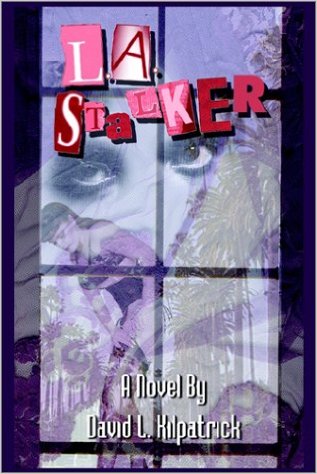
  • Canister X Book Review #2: L.A. Stalker

      0 comments

    Click Here to Order from Amazon.com


    Review of David Kilpatrick’s L.A. Stalker
    by A.P. Fuchs

    Pandora Collins, one of Hollywood’s most famous movie stars, has a stalker. To eliminate the threat, she hires a hitman to pop the guy. Quickly, all goes awry as the hitman delves into plans of his own, betrays Pandora, and slips away without a trace every time he strikes. Add a romantic subplot between Pandora and Jerry Leger, the detective assigned to her case, and you’ve got yourself a compelling read.

    Kilpatrick has succeeded where only the best authors do: he tells the story to you straight and not once are you thinking “Hey, wait a sec. What happened here?” and you’re forced to reread the last paragraph or two or, sometimes, even chapters. But the most important aspect of his storytelling is his ability to make you believe he knows what he’s talking about and that every word you read is truth.

    I’m a huge fan of the small press and of self-published titles. I’ve said it many times, but these “lesser known” books are far more engaging and far more authentic than so much of what comes out from large publishing houses these days. Kilpatrick has written one heck of a novel and the fact he went independent with it instead of selling out to some big name publisher (which he could easily have done), speaks of his desire to keep things simple and give you, the reader, a superb tale, an engrossing story, and an honest-to-God page-turner.

    Being an author myself, it’s easy for me to pick apart someone’s work (I’m not saying I’m perfect, but after writing a few books, you develop an eye for “near-perfection”), and with Kilpatrick’s novel, that is extraordinarily difficult to do. This story is one worth reading several times over and one that gives you a sense of comprehension of how those who have been hurt in the past grow into the adults they become, whether for good or ill.

    Read.